An article in the NYTimes on equity in classrooms

I Was a Low-Income College Student. Classes Weren’t the Hard Part from the September 10th New York Times, is an excellent piece by Anthony Abraham Jack, a professor at the Harvard Graduate School of Education, on his experience as a low-income student at our neighbor: Amherst College. The article articulates several, perhaps less commonly considered, challenges that students with lower incomes face in the college environment. What can we do within the structure of our classrooms to mitigate some of these challenges? A few thoughts from our experiences here at UMass

Moving to free and open textbooks and homework systems. In physics 131 and 132, I use a custom free-and-open educational resources. These textbooks reduce the cost down to $35 for access to the online homework system. This cost is quite low compared to other courses on campus. However, even so, I still usually have a handful of students who come to me asking for an extension on the first homework because they need to wait for a paycheck to afford this. Fortunately, I can make an arrangement with the textbook company who manages the homework system to get a temporary access.

A bias still exists, however. I can only help those students who come forward and ask for it. I have also experienced students who, at the end of the semester (when students start to calculate their grades), come forward and tell me. I, of course, make allowances, but my range of options reduces as the semester progresses.

While I am currently working to develop a system that will be completely free-to-students, until that project is finished, I will make a note in my syllabus explicitly inviting students to see me if they are having financial challenges that prevent them from accessing this required resource.

Another important consideration is the fact that students with lower incomes, almost uniformly, must work. These additional scheduling constraints, also an issue for students with familial obligations, can make attending traditional office hours a challenge. These issues are why we offer a TA-staffed consultation room with a wide variety of hours, including later in the evening. Since moving from individually selected office hours to this more centralized system, we have observed an increase in office hour usage.
Website update on educational resources

There has been a significant website update on our educational resources. All the stuff formerly under “Other Projects” has been split into Free and Open Educational Resources and Self-Efficacy and Attitudes Study.

Under Free and Open Educational Resources, you can find out about our work developing free-to-students textbooks for Physics 131 and 132. There is also a library of the 3-D models that are being used in Physics 132 to increase accessibility and provide multiple means of representation.

Have a look! Maybe these can be useful for your own courses!


We gave a workshop on GTA training programs based on P691G!

Today, I, along with Jake Shechter and Sara Feyzbakhsh, gave a workshop on developing GTA/TO training programs as part of Diversity Lunch Talk series hosted by the UMass-Amherst Institute for Teaching Excellence and Faculty Development. We had a group of people from all over the university from Comparative Literature to Microbiology.

In the workshop, participants thought about the TA-training needs for their specific departments and also what resources might be available as far as implementing their training goals. The workshop ended with participants thinking about designing an activity to facilitate TA skill development.

As part of building this workshop, we completely revamped the P691G portion of this website. This series of pages on our particular course now goes into rather extensive detail and includes a survey of the different pedagogical techniques that we use. The goal is to provide an easily navigable resource for people to gain inspiration for their own programs.

Thanks to Jake and Sara for helping me refine this course as well as in assisting in the development and facilitation of this workshop.

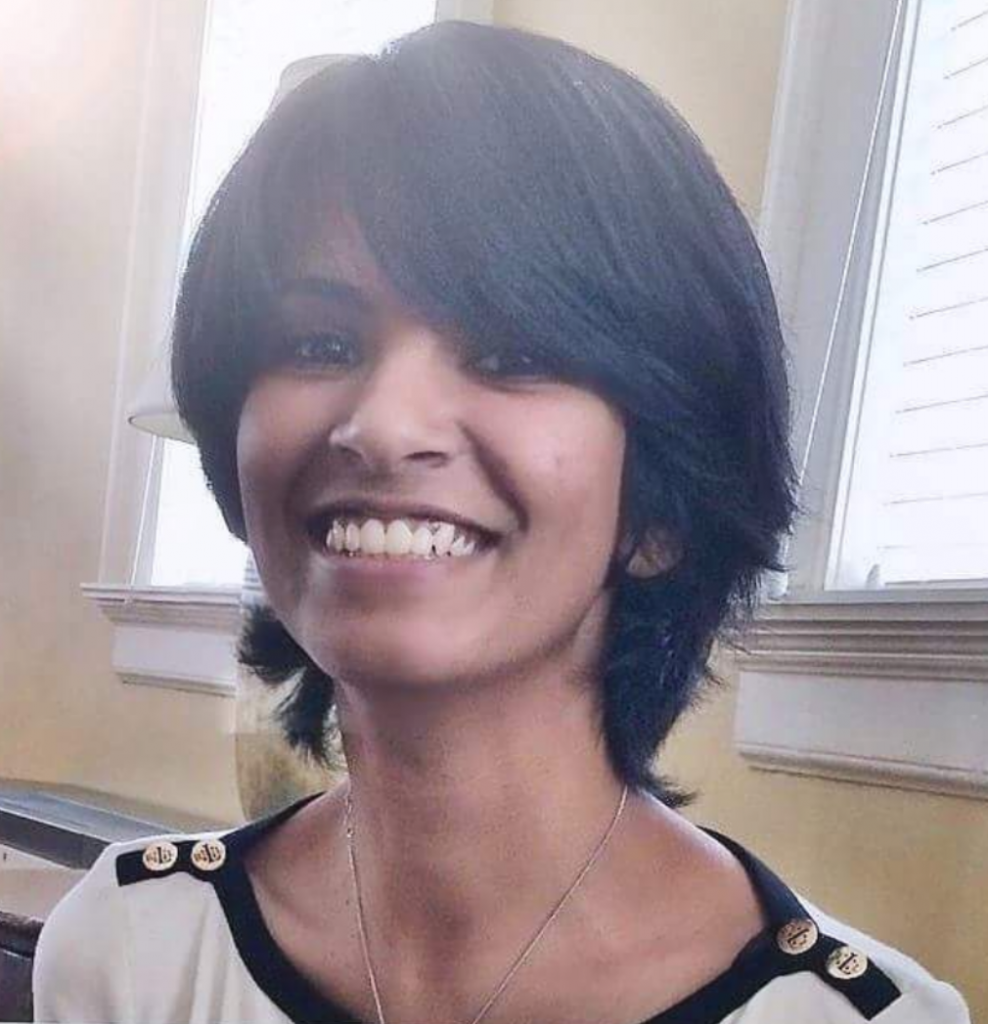
Introducing a new member – Sam Krishnamurthy

Samyukta Krishnamurthy
Welcome Samyukta Krishnamurthy!

Knowing a subject and being able to effectively teach it to a class are two very different skills. I was always told that teaching was an art, but P691G – Graduate Student Professional Development Seminar course showed me how it could be broken down into a science. I was able to apply some of these scientifically proven techniques in my Physics 132 lab courses and watch the students understand the physics concepts better and become more interactive in class. This inspired me to join the group to contribute to the self-efficacy study. I hope to learn more about the research
methodologies used in Physics Education and understand how some of them impact the students.